
Co‑Design Growth Playbooks Through Community Workshops

Setting the Stage for Collaborative Growth
Invitations that Inspire Participation
A good invitation tells a truthful story about why voices matter now, what decisions will follow, and exactly how contributions shape them. Share pre‑reads that demystify jargon, offer translated materials where needed, and foreground accessibility details. Highlight food, childcare, transit, and stipends to remove barriers. Framing the gathering as a place to build something tangible, not just talk, signals respect for time and experience while raising the chance that commitments made in the room will stick.
Framing Questions that Unlock Shared Ambition
Questions guide attention. Replace vague prompts like “How do we grow?” with specific, bounded inquiries such as “Which three outreach loops can welcome 100 new contributors without burning out mentors?” Scope each question to a horizon you can influence, then ladder them from discovery to decision. Good questions surface tensions constructively, protect minority perspectives, and invite testable ideas. They make visible the trade‑offs we must weigh, helping the group step from aspiration into coordinated, measurable next moves.
Designing Rooms That Encourage Equal Voice
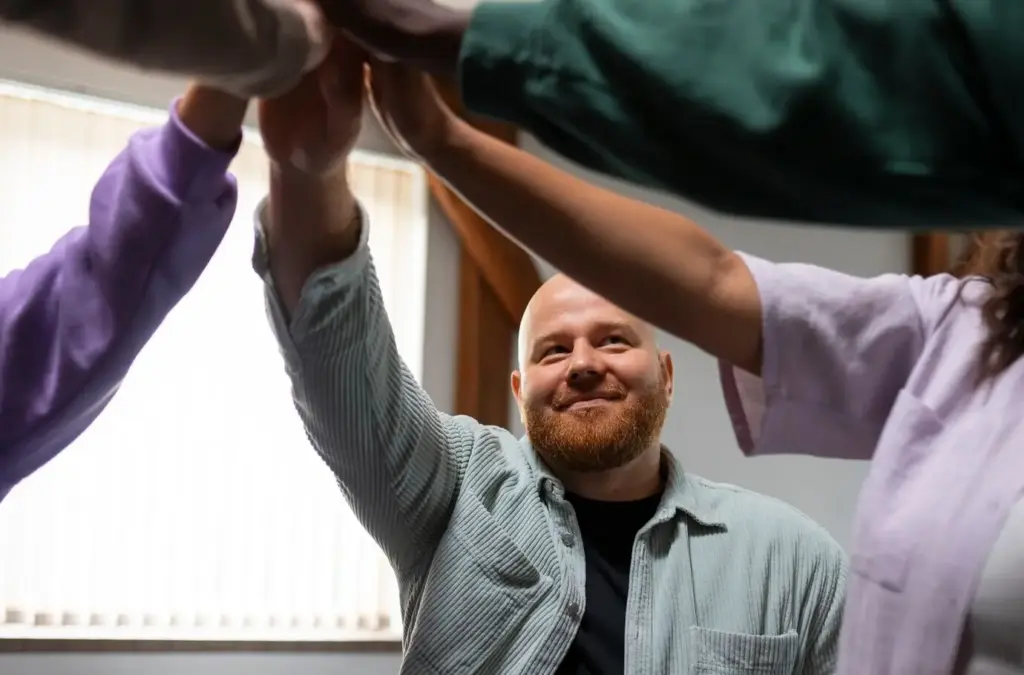
Space sends signals about power. Circular seating, name tents with pronouns, visible timekeeping, and rotating note‑takers help flatten hierarchy. Provide multiple channels—speaking, writing, and silent dot‑voting—so different processing styles contribute meaningfully. Use visible agendas with built‑in breaks, and establish hand signals for clarifying questions versus new ideas. When every participant knows how to participate, attention shifts from jockeying for airtime toward building the shared artifacts that become tomorrow’s reliable playbook.
Lightweight Research Before the First Post‑it
From Sticky Notes to Structures
From Ideas to a Playbook You Can Run

Navigating Dynamics and Power
Creating Psychological Safety from Minute One
Open with agreements co‑written in the room: assume good intent, challenge ideas not people, step up and step back, and expect learning edges. Model vulnerability by sharing a facilitator mistake and its repair. Offer opt‑out choices for activities involving personal stories. When people see risk is honored and repair is possible, they contribute bolder insights. That courage transforms ordinary workshops into generative spaces where honest feedback and ambitious co‑creation feel not only allowed but welcomed.
Making Quiet Voices Louder
Use structures like 1‑2‑4‑All and silent writing rounds to give everyone time to think before the loudest voices set direction. Invite paired shares across difference, and harvest ideas anonymously for initial clustering. Track who has spoken on a visible tally and gently redistribute airtime. When quieter participants notice their contributions shaping decisions, confidence grows. The result is richer strategy, fewer blind spots, and a playbook grounded in realities often missed by traditional leadership‑centric processes.
Turning Tension into Productive Energy
Conflict signals that people care. Normalize dissent by asking, “What risk are we protecting against?” Then convert concerns into design constraints or experiments that test competing assumptions. Use the “both‑and” ladder: immediate relief and long‑term fix. Document unresolved disagreements with explicit revisit dates. This approach keeps relationships intact while moving work forward. Over time, the community learns that disagreement is not derailment but a renewable source of clarity, creativity, and more resilient growth paths.
Pilots, Feedback, and Iteration
Rapid Prototypes You Can Touch
Thirty‑Day Pilots with Check‑ins
Learning Reviews that Celebrate Wins and Misses